Dedicated Facilities
Introduction
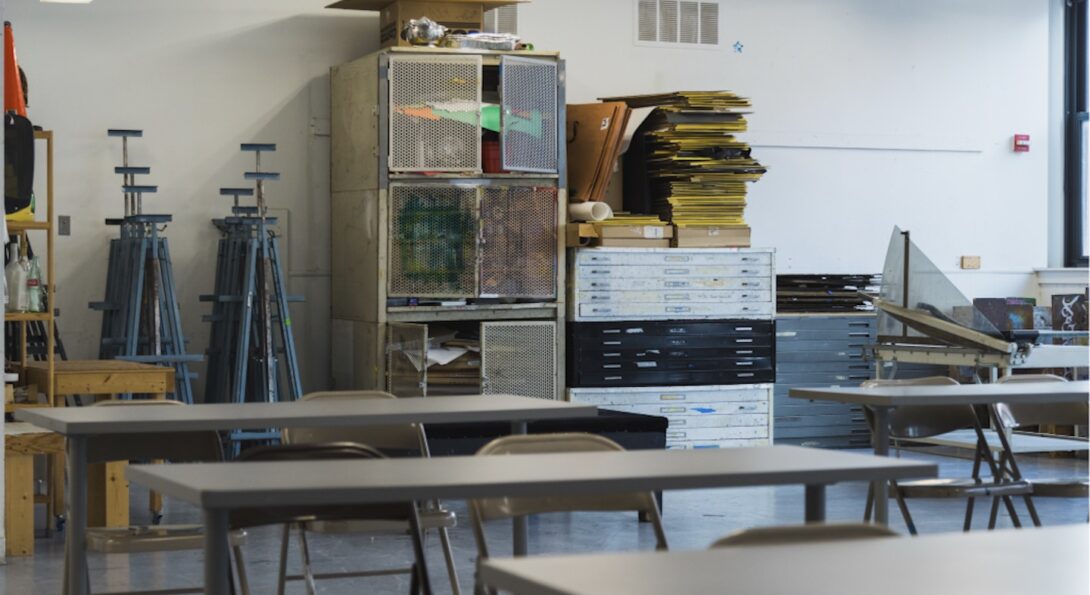
The School of Art's facilities are designed to support the full spectrum of contemporary artistic practice. Located within Art and Exhibition Hall (AEH), our five-story creative hub provides students with access to specialized studios, production spaces, emerging technologies, and professional equipment that support work across traditional, digital, and interdisciplinary media. These facilities serve as both classrooms and creative laboratories, allowing students to develop technical expertise, experiment across disciplines, and realize ambitious artistic projects from concept through exhibition.
Art and Exhibition Hall
Art and Exhibition Hall is home to the School of Art's primary instructional and studio facilities. The building brings together students, faculty, artists, educators, and researchers in a collaborative environment where creative practice occurs across disciplines and media. Students have access to dedicated spaces for learning, making, critique, and exhibition throughout their academic experience.
Expert Technical Support
A distinguishing feature of the School of Art is its team of professional Lab Specialists. Each specialist brings expertise in specific artistic media and technologies, providing students with hands-on training, technical guidance, safety instruction, and project consultation.
Rather than working within isolated disciplines, students are encouraged to collaborate with faculty and lab specialists to explore interdisciplinary approaches that combine multiple media, technologies, and methods of making. This culture of experimentation allows students to move fluidly between traditional and emerging forms of artistic practice.
Access Designed for Artists
Creative work rarely happens on a fixed schedule. To support the realities of artistic production, students enrolled in School of Art programs receive access to facilities, equipment, and resources associated with their coursework. Many spaces remain accessible beyond scheduled class times, allowing students to continue developing projects, conducting research, and creating work around their academic, professional, and personal commitments.
The result is a learning environment where students are not simply studying art—they are actively participating in a vibrant community of makers, researchers, educators, and artists supported by the facilities, technologies, and expertise necessary to bring their ideas to life.
Fabrication and Making
The School of Art maintains extensive fabrication facilities that support material experimentation and interdisciplinary making. Students have access to:
- A fully equipped woodshop
- Sculpture fabrication tools and equipment
- Digital fabrication technologies
- Laser cutting and CNC production equipment
- Project-specific making and assembly spaces
These resources support projects ranging from traditional object-making and installation work to technologically integrated contemporary practices.
Studio Facilities
Students work in professional studio environments that support a wide range of artistic practices, including:
- Drawing Studios
- Painting Studios
- Sculpture Studios
- New Media Arts Studios
- Photography Studios
- Moving Image and Film Production Spaces
- Art Education Resource Studios
- Critique and Seminar Spaces
- Dedicated Exhibition and Presentation Areas
MFA students are provided with individual studio spaces that support sustained artistic research and production throughout the graduate program. Advanced undergraduate students in the BFA and Interdisciplinary Education in the Arts programs have opportunities to work in dedicated studio environments during their final year of study, fostering the development of ambitious capstone and thesis projects.
Digital and New Media Technologies
Recognizing that contemporary artistic practice increasingly spans physical and digital environments, the School of Art provides access to a broad range of advanced technologies, including:
- High-performance digital workstations
- Digital video editing suites
- Audio recording equipment and microphones
- Virtual Reality (VR) technologies
- 3D modeling and rendering software
- Motion graphics and animation tools
- Digital fabrication technologies
- Laser cutting systems
- CNC milling equipment
- High-resolution photographic and large-format printing capabilities
These resources allow students to explore emerging forms of artistic production while integrating digital processes with traditional studio practices.
Photography, Film, and Media Production
Students working in photography, film, and moving image have access to specialized facilities that support both analog and digital workflows, including:
- Professional lighting studios
- Digital photography production spaces
- High-end photographic printing facilities
- Analog photography darkrooms
- Film processing facilities
- 16mm film production and editing resources
- Video production equipment
- Digital post-production workstations
These facilities allow students to engage with both historical and contemporary image-making practices while developing professional technical skills.